Dead City III (City on the Blue River III)
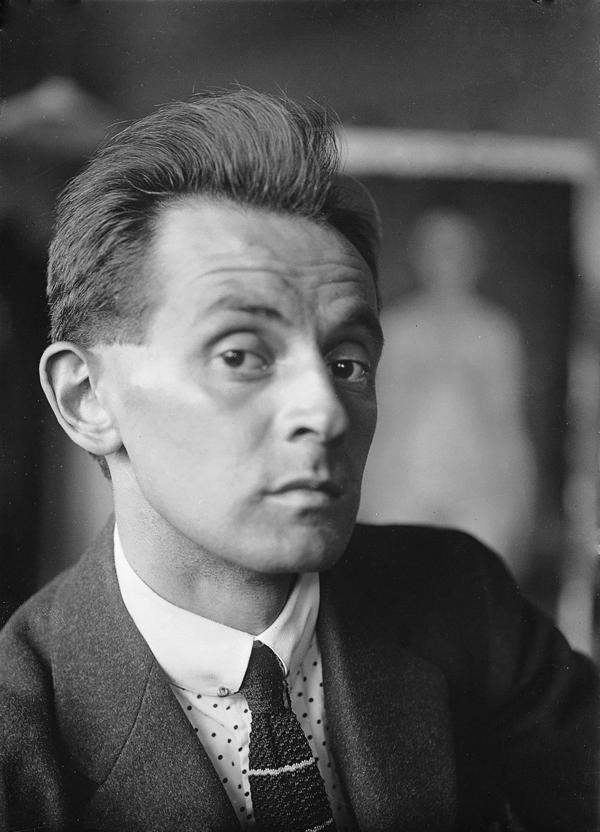
1911 - Painting - 29cm x 37.3cmMy name is Feely T. Heart, and I will be your guide today through one of our paintings: nn "Dead City III (City on the Blue River III)," painted in 1911, draws us into a world envisioned by the remarkable Austrian artist, Egon Schiele. Held right here at the Leopold Museum, this gouache and black crayon work on paper, measuring 29.8 by 37.3 centimeters, captivates with its portrayal of a cityscape both mesmerizing and melancholic. nn Schiele’s city rises before us, a dense labyrinth of houses and buildings rendered in a subdued palette of browns, grays, and whites. Notice how the structures cluster tightly, their roofs and walls intertwining to form a composition that feels almost claustrophobic. A solitary white building with a pointed roof pierces the center, its facade catching an unseen light, a beacon amidst the encroaching shadows that blanket the rest of the city. This play of light and shadow creates an atmosphere of mystery, even unease, as if we are witnessing the city in a moment of transition, caught between eras. nn The city seems to float against the dark blue background, amplifying a sense of isolation, perhaps even hinting at decay. Schiele, known for his expressive style and often unsettling imagery, invites us to contemplate themes of urban alienation and the passage of time. "Dead City III" stands as a powerful example of early 20th-century Expressionism, a movement that valued emotional honesty and subjective experience in art.
Creator
Collection
FeelTheArt®
Want to see more ? Try the app now !

or