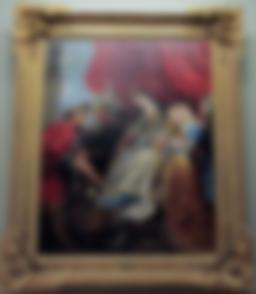

Tomyris, Queen of the Scythes, Plunges the Head of the Dead Cyrus Into a Vessel of Blood
1630 - 1640 - Painting - 1.99m x 2.63mWelcome to Room 802. Today, we're standing before a powerful work of art titled "Tomyris, Queen of the Scythes, Plunges the Head of the Dead Cyrus Into a Vessel of Blood," painted between 1630 and 1640. This massive canvas, nearly two meters wide and over two and a half meters tall, immediately draws your eye to its central figure: Queen Tomyris. nn The artist, Peter Paul Rubens, was a master of the Flemish Baroque style, known for dramatic compositions and rich colors. Here, he depicts the aftermath of a fierce battle. Queen Tomyris, adorned in luxurious white and red robes, stands as a symbol of unwavering strength. Her face, illuminated by a brilliant light, reflects her grim determination as she prepares to submerge the head of her enemy, the Persian king Cyrus, into a golden vessel overflowing with blood. nn Notice the stark contrast between the vibrant red of the queen's drapery and the deathly pallor of Cyrus's lifeless face. This dramatic use of light and shadow, known as chiaroscuro, was a hallmark of Rubens's style, heightening the emotional intensity of the scene. Surrounding the queen are figures that represent the diversity of her army, each reacting to the gruesome spectacle with a mixture of awe and apprehension. nn This painting is not just a depiction of a historical event; it's a powerful statement about the brutality of war and the consequences of ambition. Tomyris's actions, while shocking, were legendary in her time, cementing her image as a fierce and formidable ruler. Through his masterful technique and dramatic storytelling, Rubens invites us to contemplate the complexities of power, revenge, and the human condition.
Creator

Collection



FeelTheArt®
Want to see more ? Try the app now !

or