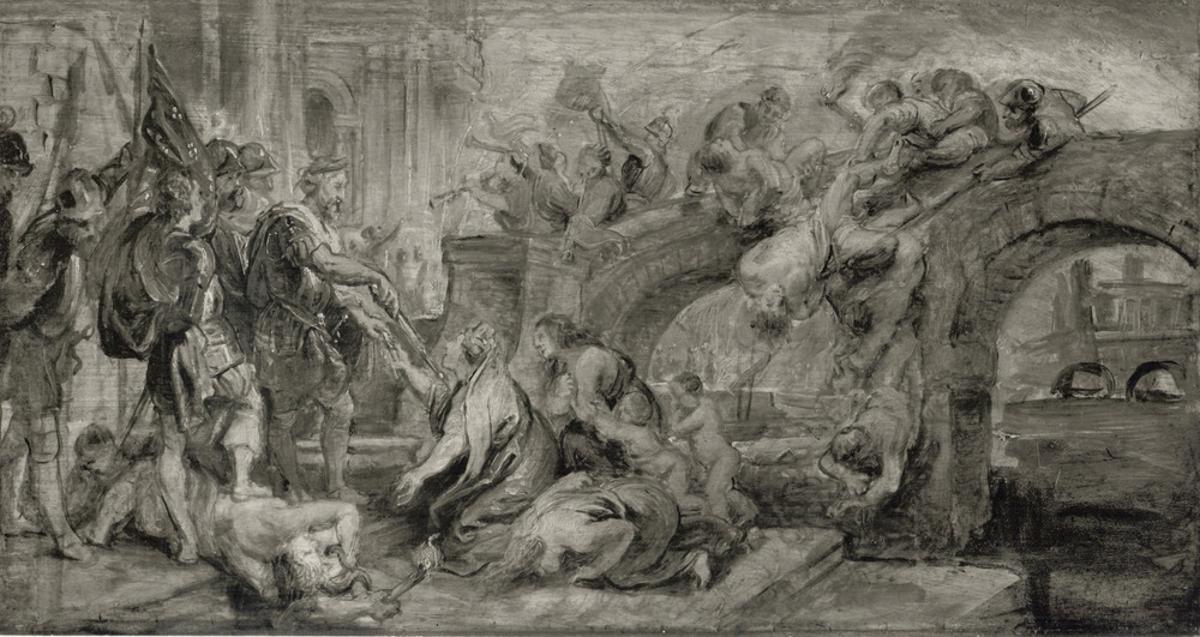

The Entry in Paris by Henry IV
1628 - PaintingWelcome, everyone, to the Gemäldegalerie! Today, we're standing before a remarkable work by the Flemish master, Peter Paul Rubens, titled "The Entry in Paris by Henry IV." Painted in 1628, this oil-on-canvas piece, though modest in size at just 0.39 meters high and 0.65 meters wide, captures the tumultuous energy of a pivotal historical moment. nn Rubens, renowned for his dynamic compositions and vibrant palette, masterfully depicts the chaotic scene of a battle. Notice the swirling movement of the figures, the clashing swords, and the sense of urgency conveyed through the soldiers' strained expressions. The scene is awash in a muted palette of browns and grays, perhaps reflecting the grim reality of war, yet punctuated by flashes of color in the soldiers' uniforms and banners. This contrast further emphasizes the drama and chaos of the battle. nn This painting is not merely a depiction of a battle; it's a powerful allegory for the triumph of Henry IV, the Protestant king of Navarre, who seized Paris in 1594, ultimately uniting France under his rule. Rubens, through his masterful use of light and shadow, composition, and symbolism, elevates this historical event into a powerful narrative about leadership, ambition, and the human cost of conflict. nn Take a moment to appreciate the details: the fallen soldiers in the foreground, a stark reminder of the battle's toll, and the determined advance of Henry IV's forces in the background, symbolizing the inevitable march of history. Rubens invites us to contemplate not just the spectacle of war, but also its profound and lasting consequences.
Creator

Collection

FeelTheArt®
Want to see more ? Try the app now !

or