The Appearance of Christ at the Cenacle
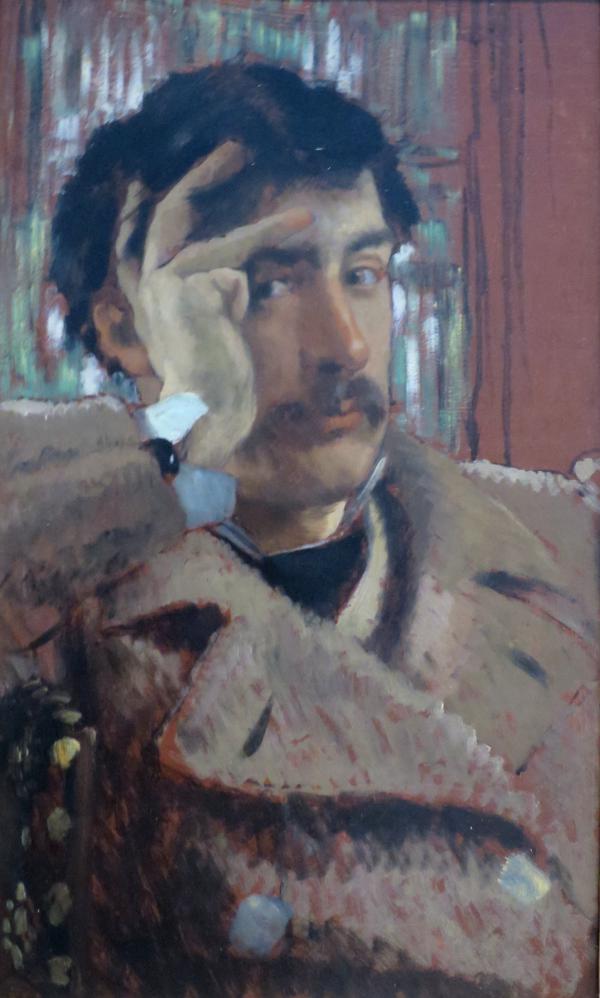
1886 - 1894 - Painting - 26cm x 14cmMy name is Feely T. Heart, and I will be your guide today through one of our paintings: nn "The Appearance of Christ at the Cenacle," painted between 1886 and 1894 by James Tissot, offers a glimpse into one of the most pivotal moments in Christian history. The painting, part of the Brooklyn Museum's collection, measures a mere 0.14 x 0.26 meters, yet it commands attention with its powerful imagery and dramatic use of light and shadow. nn Tissot, a French painter and illustrator renowned for his depictions of Parisian society, dedicated a significant portion of his later career to illustrating biblical scenes. In this particular work, he masterfully captures the awe and astonishment of the disciples as they witness the resurrected Christ. Bathed in an ethereal light, Christ stands at the center of the composition, his outstretched hands bearing the marks of his crucifixion. The disciples, shrouded in shadow, react with a mixture of fear, disbelief, and reverence. nn Tissot's meticulous attention to detail is evident in the carefully rendered figures, the realistic depiction of the dimly lit room, and the subtle variations in the disciples' expressions. Through his masterful use of light and shadow, Tissot creates a palpable sense of drama and spiritual significance. "The Appearance of Christ at the Cenacle" is not just a religious painting; it's a testament to Tissot's artistic skill and his deep understanding of human emotion.
Creator
Collection

FeelTheArt®
Want to see more ? Try the app now !

or