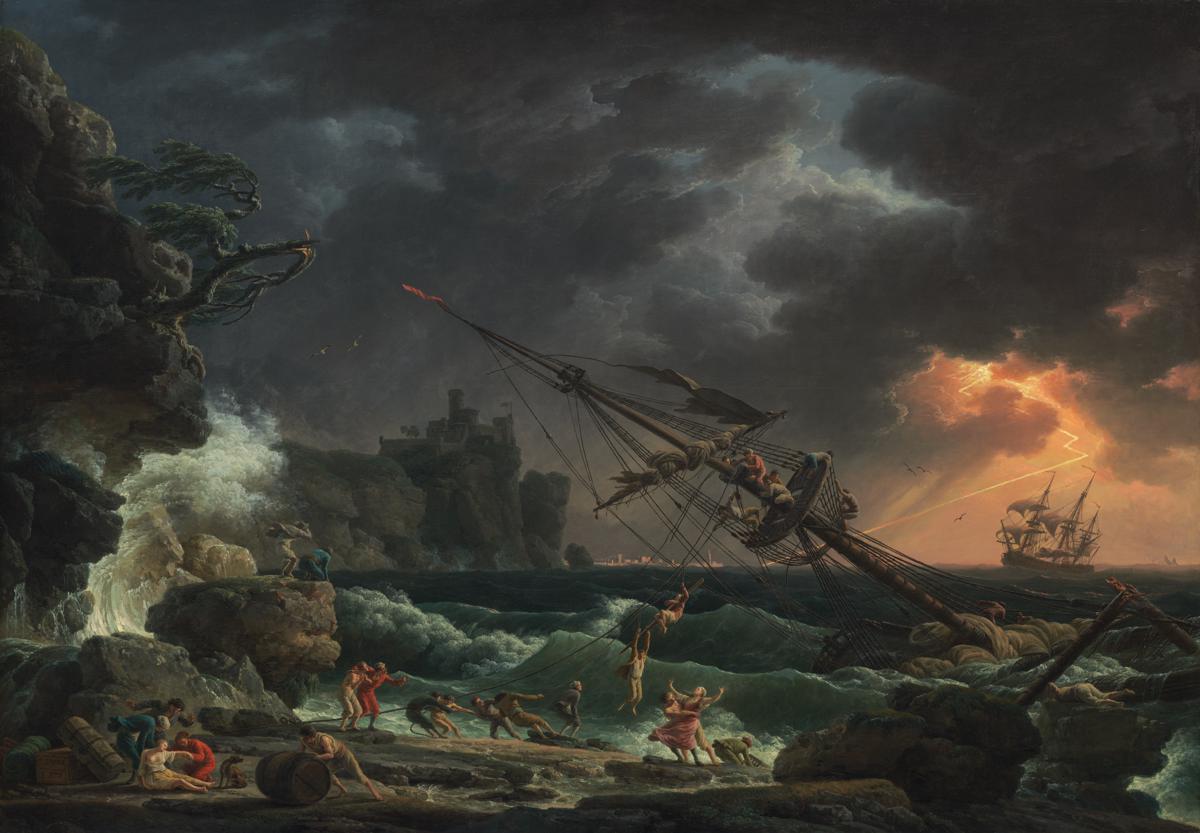

The Shipwreck
1772 - Painting - 1.629m x 1.135mToday, we're looking at a dramatic scene of maritime peril, Claude-Joseph Vernet’s “The Shipwreck,” painted in 1772. This oil painting, measuring over four and a half feet tall and over five feet wide, plunges us into the heart of a raging storm at sea. Vernet, a master of seascapes, captures the raw power of nature with incredible detail. nn Notice how the ship, tossed about like a toy, becomes almost secondary to the fury of the waves and the sky. The ship’s sails are shredded, its masts are close to snapping, and the entire vessel is at the mercy of the elements. Vernet doesn’t shy away from the danger; the fear on the faces of the figures clinging to the wreckage is palpable. nn The artist's use of light and shadow heightens the drama. Jagged bolts of lightning illuminate the scene, momentarily revealing the churning sea and the desperate struggle for survival. The dark, ominous clouds and the use of a muted color palette further emphasize the perilous situation. nn “The Shipwreck” is more than just a depiction of a maritime disaster; it’s a reflection on the power of nature and the fragility of human life. This painting, housed in the prestigious National Gallery of Art, offers us a glimpse into the artistic and cultural contexts of 18th-century Europe, where maritime disasters were a stark reality, and the awe-inspiring power of nature was a source of both fear and fascination.
Creator

Collection

FeelTheArt®
Want to see more ? Try the app now !

or