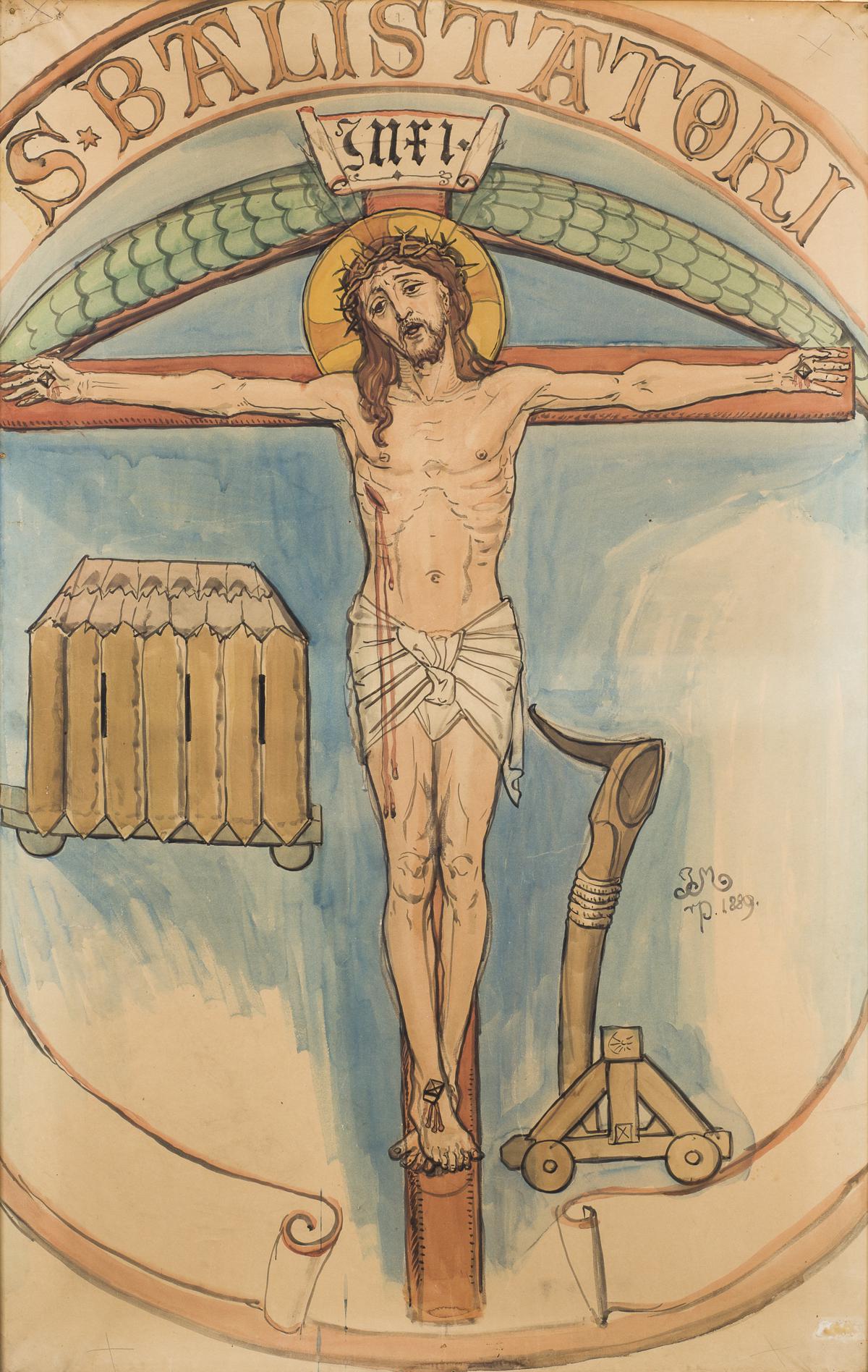

Karton do polichromii Kościoła Mariackiego - Godło łuczników
1889 - Painting - 99cm x 1.55mWelcome, everyone, to the National Museum in Kraków! Today, we're standing before a captivating piece titled "Karton do polichromii Kościoła Mariackiego - Godło łuczników," painted in 1889. This translates to "Cardboard for the Polychromy of St. Mary's Church - Emblem of the Archers," offering us a glimpse into the artwork's purpose and intended audience. nn At first glance, your eyes are immediately drawn to the central figure of Jesus Christ on the cross. The artist portrays Christ in a traditional pose, arms outstretched against a serene blue sky, wearing a white loincloth. Notice the poignant details – the crown of thorns, the wounds, and the blood – all rendered with a somber realism. nn What makes this painting particularly intriguing is the presence of archery-related objects flanking the cross. On one side, we see a target riddled with arrows, and on the other, a large crossbow leans against the painting's edge. These elements strongly suggest a connection to the archers' guild, perhaps commissioned by them or intended for display in a place significant to their order. nn The artist masterfully uses a muted color palette of browns, greens, and reds, creating a sense of solemnity and reflection. The composition is framed by a decorative arch reminiscent of a vine, with the inscription "S. BALISTAT ORI" further emphasizing the archery theme. nn This artwork is not just a depiction of the crucifixion; it's a fascinating example of how art was used to connect with specific communities and their traditions. It invites us to reflect on the historical context of art and its role in society.
Creator
Collection
FeelTheArt®
Want to see more ? Try the app now !

or