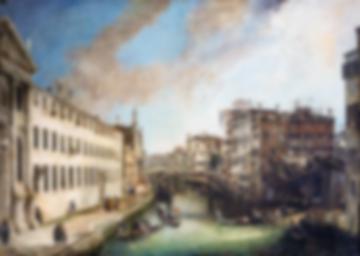

View of Venice: Rio dei Mendicanti
1723 - Painting - 2m x 1.43mThe Rio dei Mendicanti is an oil painting by the Italian Rococo painter Canaletto. He did so after his stay in Rome in 1723. It was commissioned by a Venetian nobleman in order to decorate his palace. The commission consists of a total of four canvases, the Rio dei Mendicanti, Grand Canal, view northeast from Palazzo Balbi towards the Rialto Bridge (both in the Venetian museum of Ca'Rezzonico) and the Grand Canal, view East from Campo San Vio and Piazza San Marco (both in the Thyssen-Bornemisza Museum in Madrid). The first official documentation on the existence of the paintings appears in 1806 as part of the private collection of the Prince of Liechtenstein.
This painting represents the first example that is preserved in Venetian Veduta style of the painter although it is believed that there must have been other previous works, now lost, given the incredible mastery that the painter treasures in the realization of this painting.
The image it shows is a part of Venice little touristy and quite unknown to people who did not live in Venice unlike what is normal in this style of painting that usually enhances the most recognized images of cities. It is represented here however an area well known by the Venetians to be a usual place of work for them.
The picture shows on the left the Chiesa di San Lazzaro dei Mendicanti and the Scuola di San Marco. In the canal you can see two bridges, the closest to the observer is a simple wooden bridge while the farthest is the so-called Ponte del Cavallo. On the right side there are a series of buildings in which the painter highlights the clothes washed on the tendales.
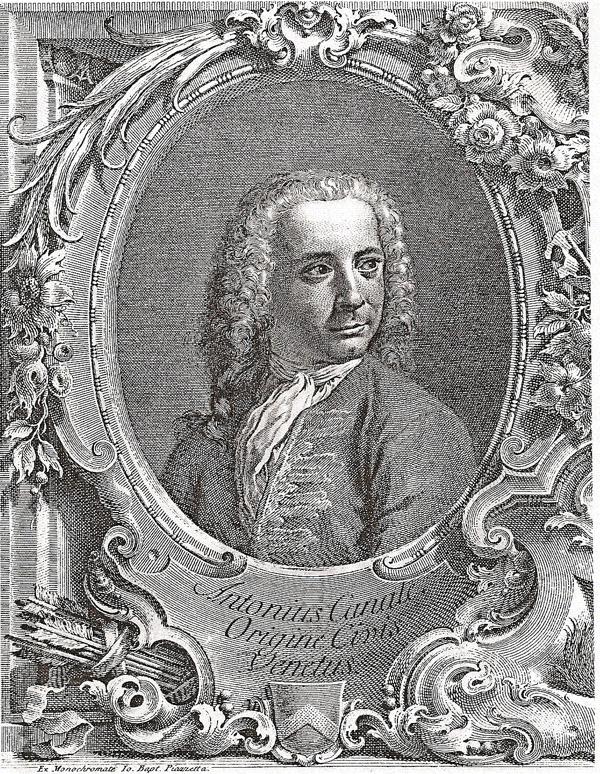
Creator
Collection

FeelTheArt®
Want to see more ? Try the app now !

or