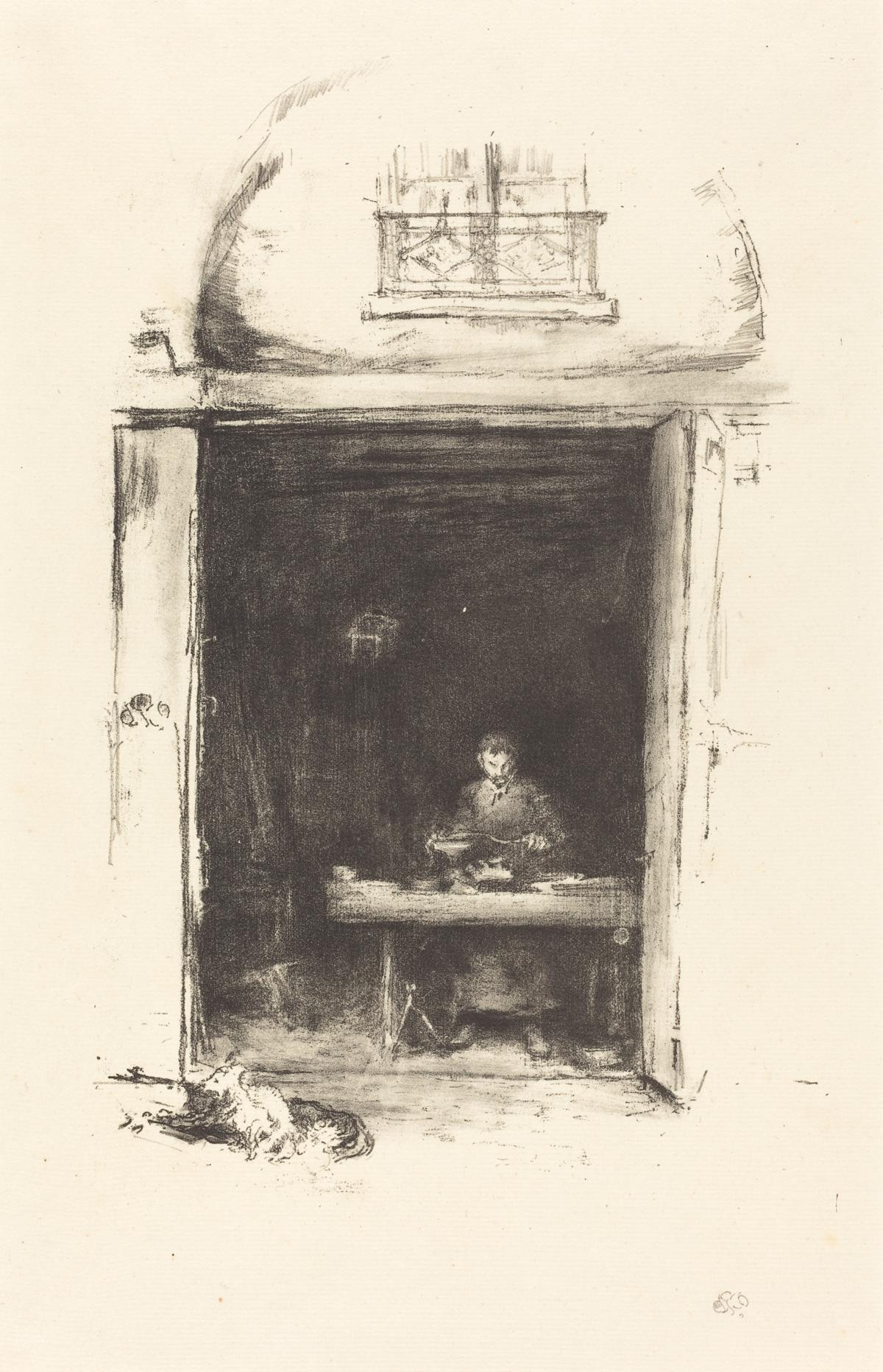

The Smith, Passage du Dragon
1894 - Print - 17cm x 27cmMy name is Feely T. Heart, and I will be your guide today as we take a closer look at James McNeill Whistler's intriguing etching, "The Smith, Passage du Dragon". Created in 1894, this captivating black and white print, currently housed in the National Gallery of Art, transports us to a Parisian street corner. nn Measuring just 0.176 meters wide and 0.275 meters tall, the etching draws our attention to the stark contrast between light and shadow. We are positioned as if peering into the dimly lit interior of the smithy, a space brimming with the suggestion of activity and the legacy of craftsmanship. The arched doorway acts as a frame, inviting us to observe the smith at his workbench, diligently working on a piece of metal. The pile of materials outside hints at the rhythm of his labor. nn Whistler's masterful use of etching creates a sense of depth and texture. Notice the delicate lines that form the intricate railing of the balcony above, contrasting with the bold strokes that depict the rough-hewn walls of the smithy. This interplay of light and dark, detail and suggestion, is characteristic of Whistler's distinctive style. nn "The Smith, Passage du Dragon" is not merely a depiction of a place, but a glimpse into a bygone era. It captures the essence of pre-industrial Paris, a time when skilled artisans like the smith played a vital role in everyday life. Through Whistler's masterful hand, we are transported back in time, invited to contemplate the dignity of labor and the enduring power of traditional crafts.
Creator
Collection


FeelTheArt®
Want to see more ? Try the app now !

or