Portrait of a Man with a Blue Chaperon
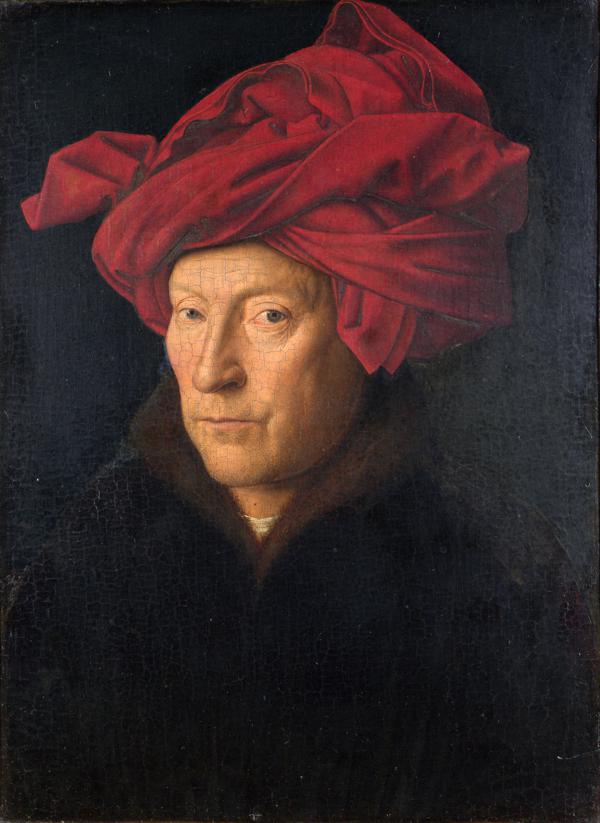
1430 - 1440 - Painting - 13cm x 19.1cmPortrait of a Man with a Blue Chaperon (or Portrait of a Man with a Blue Hood, earlier Portrait of a Jeweller or Man with a Ring) is a very small (22.5 cm x 16.6 cm with frame) oil on panel portrait of an unidentified man attributed to the Early Netherlandish painter Jan van Eyck.
The painting was commissioned and completed sometime around 1430. It contains a number of elements typical of van Eyck's secular portraits, including a slightly oversized head, a dark and flat background, forensic attention to the small details and textures of the man's face, and illusionistic devices. Artists did not give titles to their works during the Northern Renaissance period, and as with any portrait of a sitter whose identity is lost, the painting has attracted generic titles over the years. It had long been thought that the ring held in the man's right hand was meant as an indication of his profession as a jeweller or goldsmith and so the painting was long titled on variants of such. More recently the ring is interpreted as an emblem of betrothal and the titles given by various art historians and publications since are usually more descriptive of the colour or form of the headdress.
The painting was attributed to van Eyck in the late 19th century, but this was repeatedly challenged by some art historians until a 1991 cleaning when infrared photography revealed an underdrawing and methods of handling of oil that were unmistakably van Eyck's.
Creator
Collection

FeelTheArt®
Want to see more ? Try the app now !

or